Descrizione
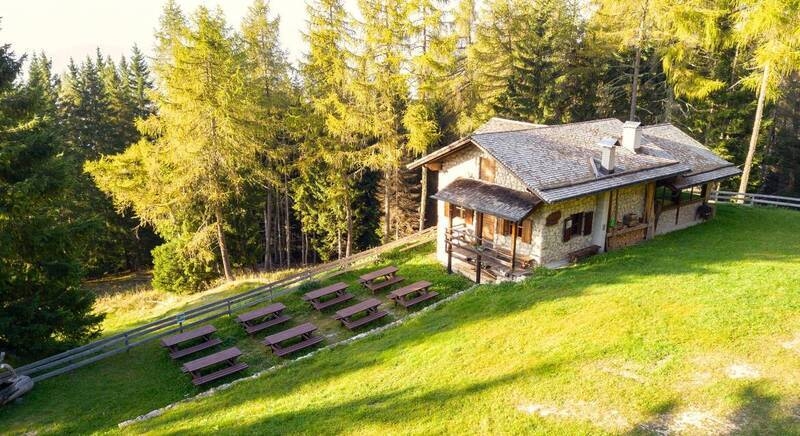
Le malghe, di proprietà del Comune, si trovano ai piedi del Monte Roen, immerse tra boschi e prati e fanno parte di un circuito di malghe tra loro collegate, percorrendo il cosiddetto “giro delle malghe del Roen”. Attualmente le malghe sono utilizzate solo come punto di ristoro e pernottamento a propria organizzazione.
Si possono raggiungere anche in macchina, previo autorizzazione comunale, partendo rispettivamente da Amblar (circa 5.5 Km) e Don (circa 5 km); ma sicuramente è più suggestivo arrivarci a piedi o in sella ad un e-bike o montati a cavallo.
Percorrendo il sentiero S.A.T. 537 ci si può spostare a piedi o in e-bike da una all’altra malga (circa 1.5km) e godersi la naturalità del paesaggio boschivo immersi nel profumo di genziane, botton d’oro, orchidee …

La mappa indica i percorsi per arrivare alle due malghe di Amblar-Don.
tratto in bianco: percorso per malga Amblar
tratto in verde: percorso per malga Don
tratto in giallo percorso fra malga Amblar e Don
LA MALGA DI AMBLAR
La malga di Amblar di un tempo
Malga storica di proprietà del Comune. E’ stata costruita nell’anno 1884. Per la sua costruzione si mobilitò l’intera popolazione del paese: chi si adoperava per lo scavo delle fondamenta, chi preparava la calce, chi trasportava il legname e preparava le “scandole” per la copertura. La costruzione vera e propria della malga iniziò nella primavera del 1884 e fu affidata ad un impresa. La malga fu affittata a diversi affittuari e nel 1887 vi erano un’ottantina di bovini provenienti persino dalla piana Rotaliana ed addirittura dall’Alto Adige.
Dopo il 1900 però, vi furono spesso difficoltà a trovare un affittuario e nel corso della prima guerra mondiale essa venne completamente abbandonata. Nel 1919 l’edificio era praticamente diroccato, ma negli anni venti la struttura ebbe una nuova giovinezza; si operarono i necessari restauri, e ritornarono i malgari con le bestie. Con l’avvento della II° guerra mondiale la malga fu abbandonata definitivamente.
La malga di Amblar, adesso
Dopo diversi anni di abbandono la malga fu ristrutturata dal Comune nel 1994 regalando così agli escursionisti, un punto di riferimento dove sostare e ristorarsi e pernottare. Il fabbricato non ospita più animali d’alpeggio ed è composto, al piano terra, da cucina a legna e soggiorno per prepararsi e consumare il proprio pranzo; sopra, un soppalco in legno con circa dieci posti per dormire con sacco a pelo.
Informazioni malga Amblar
La malga è usufruibile, da Associazioni(previo permesso) e privati residenti.
L’uso diurno dei locali della malga è libero, mentre per il pernottamento serve l’autorizzazione comunale.
Per raggiungere la malga con la macchina, serve un permesso comunale che viene rilasciato solo ad un automezzo.
Per informazioni contattare il Comune 0463875109
LA MALGA DI DON
La malga di Don di un tempo.
La prima citazione della malga è del 1771. Nel libro dell’Amministrazione di Don si cita il nome della malga Manzara detta “malghetta”. Nel 1847 una parte della malga fu distrutta da un incendio, ma subito ricostruita l’anno successivo. Nel 1851 fu costruito il nuovo stallone. La malga era data in gestione a vari affittuari provenienti da varie località del Trentino e il corrispettivo costituiva una delle fonti principali di introito per il Comune. La malga ospitava negli ultimi anni mucche da latte, ma prima ospitava anche capre che pascolavano nei pascoli. E’ stata utilizzata fino all’inizio della 2° guerra mondiale, poi abbandonata. Le “scandole” del tetto furono utilizzate per coprire i tetti dei “baiti” costruiti nei dintorni, ad uso deposito attrezzi e abitazione durante il periodo della fienagione(monteson). Successivamente negli anni ‘50 sono stati tolti anche i travi del tetto per uso legna da ardere.
La malga di Don, adesso
Nel 1988 il Comune fece ristrutturare completamente la malga; i lavori terminarono nel 1990.
Anche in questo caso, come per la malga di Amblar, il fabbricato è stato trasformato in un punto di riferimento per gli escursionisti per riposarsi e prepararsi il pranzo.
l locali interni sono così distribuiti; al piano terra c’è il focolare a legna con caminetto e tavoli, al primo piano ci sono tre posti letto ad uso bivacco per dormire con il sacco a pelo, poi una stanza con sette posti letto. All’esterno ci sono diversi tavoli con panche. Nell’ultima domenica di luglio si svolge una festa campestre, organizzata dal Gruppo Alpini di Don, a cui sono invitati tutti, turisti e residenti.
Informazioni malga Don
La malga è usufruibile, da Associazioni(previo permesso) e privati residenti.
L’uso diurno dei locali della malga è libero, mentre per il pernottamento serve l’autorizzazione comunale.
Per raggiungere la malga con la macchina, serve un permesso comunale che viene rilasciato solo ad un automezzo.
Per informazioni contattare il Gruppo Alpini di Don n° 331 2055 242
LA VITA IN MALGA DI UNA VOLTA
Nelle malghe si svolgeva gran parte dell’attività di molti abitanti delle vallate trentine.
In quel tempo possedere una mucca era un gran valore. Sinonimo di ricchezza e chi ne aveva più di una era ritenuto, addirittura, benestante.
Nella bella stagione, da metà giugno a metà settembre, era consuetudine portare all’alpeggio le mucche nelle malghe.. Diversi erano i compiti da svolgere, distribuiti fra i “malgari”.
Chi faceva il formaggio (il casaro) responsabile della trasformazione del latte nei prodotti caseari(formaggio, ricotta, burro). Chi curava gli animali (il vacar)era fondamentale perchè stessero bene e quindi doveva intervenire tempestivamente in caso di necessita anche di notte, per questo motivo lui dormiva in uno spazio riservato, nello stallone.
Altre figure erano i “vacaroi” che aiutavano il “vacar” al pascolo e pulivano la stalla e la malga oltre che a scendere in paese per le varie commissioni.
La vita in malga era scandita dalle stagioni e dagli eventi meteorologici e richiedeva disciplina e passione. Era un lavoro duro, dove i momenti di riposo erano molto pochi, ma in che in compenso regalava momenti di allegra e solidale amicizia; valori che nell’attuale società sono sempre meno vissuti.

Description
Malghe (herdsmen's shelters) in Amblar and Don
The malghe or herdsmen’s shelters belong to the Town Council and nestle in the woods and meadows at the foot of Monte Roen. They are part of a circuit of malghe that are all connected to form the so-called “giro delle malghe del Roen” or Roen malghe circuit. They are currently used only as somewhere for walkers to prepare food and sleep.
They can also be reached by car, subject to prior authorisation from the Town Council, starting either from
Amblar (about 5.5 km) or Don (about 5 km), but it is definitely more fun to arrive on foot or e-bike or even on horseback.
Following SAT trail 537 will take you on foot or e-bike from one malga to another, covering about 1.5 km, allowing you to enjoy the natural woodland surrounded by the scent of gentian, buttercups, and orchids…

La mappa indica i percorsi per arrivare alle due malghe di Amblar-Don.
white line: route to Ambler malga
green line: route to Don malga
yellow line: route between Amblar and Don malghe
THE MALGA IN AMBLAR
Amblar malga, in the past
A historic malga or herdsman’s shelter that belongs to the Town Council. It was built in 1884 and the whole village was involved in its construction. Some dug the foundations, others made the limewash, and still others transported the timber and prepared the shingles for the roof. Actual building started in the spring of 1884 and was carried out by a company. The malga was rented out to various tenants and in 1887 it was home to around eighty cows from as far away as the Rotaliana plain and even Alto Adige.
After the 1900s however, finding a tenant became increasingly more difficult and during the first World War it was completely abandoned. In 1919, the building was practically a ruin but in the twenties it was given a new breath of life; the necessary renovation work was carried out and the malgari or herdsmen returned with their cattle. The start of the Second World War, however, saw the malga abandoned forever.
Amblar malga, today
After many years’ neglect, the malga was renovated by the Town Council in 1994 to provide walkers with a stopping place where they could rest, prepare food and sleep. The building no longer houses mountain animals and on the ground floor has a kitchen with wood-fired stove and lounge for cooking and eating, while upstairs there is a wooden platform with room for about ten people to sleep in sleeping bags.
Information about Amblar malga
The malga can be used by Associations (subject to permission) and private residents.
It can be used freely during the day but overnight stays must be authorised by the Town Council.
To reach the malga by car you need a Town Council permit that will be issued to just one car.
For info contact the Town Council +39 0463875109
THE MALGA IN DON
Don malga, in the past
The malga is first mentioned in 1771, when the name of the malga Manzara aka “malghetta” appears in the Don town administration ledger. In 1847, part of the malga was destroyed by fire but immediately rebuilt the following year. In 1851 a new stall was built. Management of the malga was entrusted to the various tenants from all over Trentino and the rent represented one of the main sources of income for the Town Council. In its later years, the malga housed dairy cows, but previously it had also afforded shelter to goats who grazed in the meadows. It was used until the start of the Second World War, then abandoned. The shingles on the roof were used to cover the roofs of the baiti or cabins built nearby for the storage of tools and as homes during the hay harvest or monteson. In the fifties even the roof beams were taken for firewood.
Don malga, today
In 1988, the Town Council had the malga completely renovated and work finished in 1990.
Again in this case, as happened with Amblar malga, the building was turned into a support point where walkers could rest and make lunch.
The interior layout sees a wood fireplace with chimney and tables on the ground floor and three beds on the first floor for use with sleeping bags plus another room that sleeps seven. Outside are a number of tables and benches. Every last Sunday in July, the Don Alpine Group holds a country festival here to which everyone is invited, tourists and residents alike.
Information about Don malga
The malga can be used by Associations (subject to permission) and private residents.
It is free during the day but overnight stays must be authorised by the Town Council.
To reach the malga by car you need a Town Council permit that will be issued to just one car.
For more information contact the Don Alpine Group on +39 331 2055 242
LIFE IN A MALGA IN THE PAST
Most of the activities carried out by many of the inhabitants of the Trentino valleys happened in the malghe.
At that time, a cow was very valuable property. It was a synonym of wealth and anyone owning more than one was even considered well-to-do.
In summer, from mid-June to mid-September, cows were normally moved up to the mountain pastures and the malghe. The various tasks involved were shared by the malgari.
The casaro turned the milk into dairy products such as cheese, ricotta and butter. The vacar looked after the animals, a fundamental job that required him to sleep in his own space in the stalls so that he could intervene promptly if required during the night.
Then there were the vacaroi, who helped the vacar in the meadows and cleaned the stalls and the malga as well as going on errands down in the town.
Life in the malga was marked by the seasons and the weather and called for discipline and passion. It was hard work, with little time to rest, but in return it brought moments of joy and firm friendship, values found less and less frequently today.

Beschreibung
Almen von Amblar und Don
Die gemeindeeigenen Almen liegen am Fuße des Monte Roen. Sie sind von Wäldern und Wiesen umgeben und Teil des Almrundweges „Giro delle malghe del Roen”. Derzeit werden die Almen nur als Einkehr- und Übernachtungsmöglichkeiten in Selbstorganisation genutzt.
Sie können mit Genehmigung der Gemeinde von Amblar (ca. 5,5 km) und von Don (ca. 5 km) aus mit dem Auto erreicht werden. Schöner ist es jedoch zu Fuß, mit dem E-Bike oder auf dem Rücken eines Pferdes dorthin.
Auf dem S.A.T.-Weg 537 kann man zu Fuß oder mit dem E-Bike von Almhütte zu Almhütte gelangen (ca. 1,5 km) und dabei die Natürlichkeit der Waldlandschaft, umgeben vom Duft von Enzianen, Butterblumen, Orchideen usw. genießen.
La mappa indica i percorsi per arrivare alle due malghe di Amblar-Don.
Weißer Abschnitt: Weg zur Malga Amblar
Grüner Abschnitt: Weg zur Malga Don
Gelber Abschnitt: Weg zwischen der Malga Amblar und Don
DIE ALM VON AMBLAR
Die Amblar-Alm damals
Die alte Almhütte im Gemeindebesitz wurde im Jahr 1884 erbaut. Für ihre Errichtung wurde die gesamte Dorfbevölkerung mobilisiert: einige hoben das Fundament aus, andere bereiteten den Kalk vor und wieder andere transportierten das Holz und machten die „Schindeln“ für das Dach. Der eigentliche Bau der Almhütte begann im Frühjahr 1884 und wurde einem Unternehmen anvertraut. Die Hütte wurde an verschiedene Pächter vermietet. Im Jahr 1887 gab es etwa achtzig Rinder, die sogar aus der Rotaliana-Ebene und aus Südtirol kamen.
Die alte Almhütte der Gemeinde wurde 1884 erbaut. Für den Bau wurde die gesamte Dorfbevölkerung mobilisiert: Einige hoben die Fundamente aus, andere bereiteten den Kalk vor, wieder andere transportierten das Holz und machten die „Schindeln“ für das Dach. Der eigentliche Bau der Hütte begann im Frühjahr 1884 und wurde einer Firma anvertraut. Die Hütte wurde an verschiedene Pächter vergeben. Im Jahre 1887 gab es etwa 80 Stück Rindvieh, das sogar aus der Rotaliana-Ebene und aus Südtirol kam.
Nach 1900 gab es jedoch häufig Schwierigkeiten, einen Pächter zu finden, und während des Ersten Weltkriegs wurde das Gebäude ganz aufgegeben. Im Jahr 1919 war das Gebäude praktisch verfallen, aber in den 1920er Jahren wurde es wieder instandgesetzt. Die notwendigen Renovierungsarbeiten wurden durchgeführt und die Hirten kehrten mit ihren Tieren zurück. Mit dem Ausbruch des Zweiten Weltkrieges wurde die Alm endgültig aufgegeben.
Die Amblar-Alm heute
Nachdem die Alm mehrere Jahre nicht bewirtschaftet worden war, wurde sie 1994 von der Gemeinde renoviert, um Wanderern eine Einkehr- und Übernachtungsmöglichkeit zu bieten. Tiere gibt es auf der Alm keine mehr. Die Hütte besteht im Erdgeschoss aus einer holzbefeuerten Küche und einem Raum für die Zubereitung der Mahlzeiten und zum Essen. Darüber befindet sich ein Zwischengeschoss aus Holz mit einem Schlafraum, in dem ca. 10 Personen im Schlafsack übernachten können.
Informationen Amblar-Alm
Die Alm kann von Vereinen (mit vorheriger Genehmigung) und ansässigen Privatpersonen genutzt werden.
Die Nutzung der Alm ist tagsüber kostenlos, für Übernachtungen ist eine Genehmigung der Gemeinde erforderlich.
Für die Zufahrt mit dem Auto ist eine Genehmigung der Gemeinde erforderlich, die nur für ein Fahrzeug erteilt wird.
Informationen bei der Gemeinde unter +39 0463875109.
DIE ALM VON DON
Die Don-Alm damals
Die erste Erwähnung der Alm geht auf das Jahr 1771 zurück, als im Verwaltungsbuch von Don die Alm Manzara als „malghetta“ erwähnt wird. Im Jahr 1847 wurde ein Teil der Almhütte durch einen Brand zerstört, aber im darauffolgenden Jahr sofort wieder aufgebaut. Im Jahr 1851 wurde der neue Stall gebaut. Die Alm wurde von verschiedenen Pächtern aus unterschiedlichen Teilen des Trentino bewirtschaftet. Die Pachteinnahmen waren eine der Haupteinnahmequellen der Gemeinde. In den letzten Jahren wurden auf der Alm Milchkühe gehalten, früher aber auch Ziegen, die auf den Weiden grasten. Die Alm wurde bis zum Beginn des Zweiten Weltkrieges bewirtschaftet und dann aufgegeben. Mit den Schindeln wurden die Dächer der in der Nähe errichteten Hütten gedeckt, die während der Heuernte (monteson) als Geräteschuppen und Unterkunft dienten. Später, in den 1950er Jahren, wurden auch die Dachbalken entfernt, um sie als Brennholz zu verwenden.
Die Don-Alm heute
1988 ließ die Gemeinde die Hütte komplett renovieren, die Arbeiten wurden 1990 abgeschlossen.
Wie die Amblarer Hütte wurde auch diese Almhütte als Anlaufstelle für Wanderer zur Rast und Essenszubereitung eingerichtet.
Die Innenräume sind wie folgt aufgeteilt: Im Erdgeschoss befindet sich eine Feuerstelle mit Kamin und Tischen. Im ersten Stock gibt es drei Schlafplätze, wo man mit Schlafsäcken schlafen kann und einen Raum mit sieben Schlafplätzen. Draußen gibt es mehrere Tische und Bänke. Am letzten Sonntag im Juli findet ein Dorffest statt, das von der Alpini-Gruppe Don organisiert wird und zu dem Touristen und Einheimische eingeladen sind.
Informationen Don-Alm
Für Informationen wenden Sie sich bitte an die Alpini-Gruppe Don unter der Nummer 331 2055 242.
Die Alm kann von Vereinen (mit vorheriger Genehmigung) und ansässigen Privatpersonen genutzt werden.
Die Nutzung der Alm ist tagsüber kostenlos, für Übernachtungen ist eine Genehmigung der Gemeinde erforderlich.
Für die Zufahrt mit dem Auto ist eine Genehmigung der Gemeinde erforderlich, die nur für ein Fahrzeug erteilt wird.
Für weitere Informationen wenden Sie sich bitte an die Gruppe Alpini Don unter der Nummer +39 331 2055 242.
DAS LEBEN AUF DEN ALMEN EINST
Die Almen waren für viele Bewohner der Trentiner Täler ein wichtiger Erwerbszweig.
Der Besitz einer Kuh war damals viel wert. Wer mehr als eine Kuh besaß, galt als wohlhabend.
Bei schönem Wetter, von Mitte Juni bis Mitte September, war es üblich, die Kühe auf die Almen zu treiben. Unter den Sennern waren verschiedene Aufgaben verteilt.
Der Käser (casaro) war für die Verarbeitung der Milch zu Milchprodukten (Käse, Ricotta, Butter) zuständig. Der Hirte (vacar) war für das Wohlergehen der Tiere verantwortlich und musste bei Bedarf sofort eingreifen, auch nachts, weshalb er in einem eigenen Raum (stallone) schlief.
Weitere Personen waren die „vacaroi“, die Hilfshirten, die dem Viehhirten auf der Weide halfen und Stall und Hütte reinigten. Sie mussten auch zum Einkaufen ins Tal gehen.
Das Leben auf der Alm war von den Jahreszeiten und dem Wetter geprägt und erforderte Disziplin und Leidenschaft. Es war harte Arbeit, die nur wenige Momente der Ruhe zuließ, dafür aber Momente der Freude und des Zusammenhalts, Werte, die in der heutigen Gesellschaft immer seltener erlebt werden.